
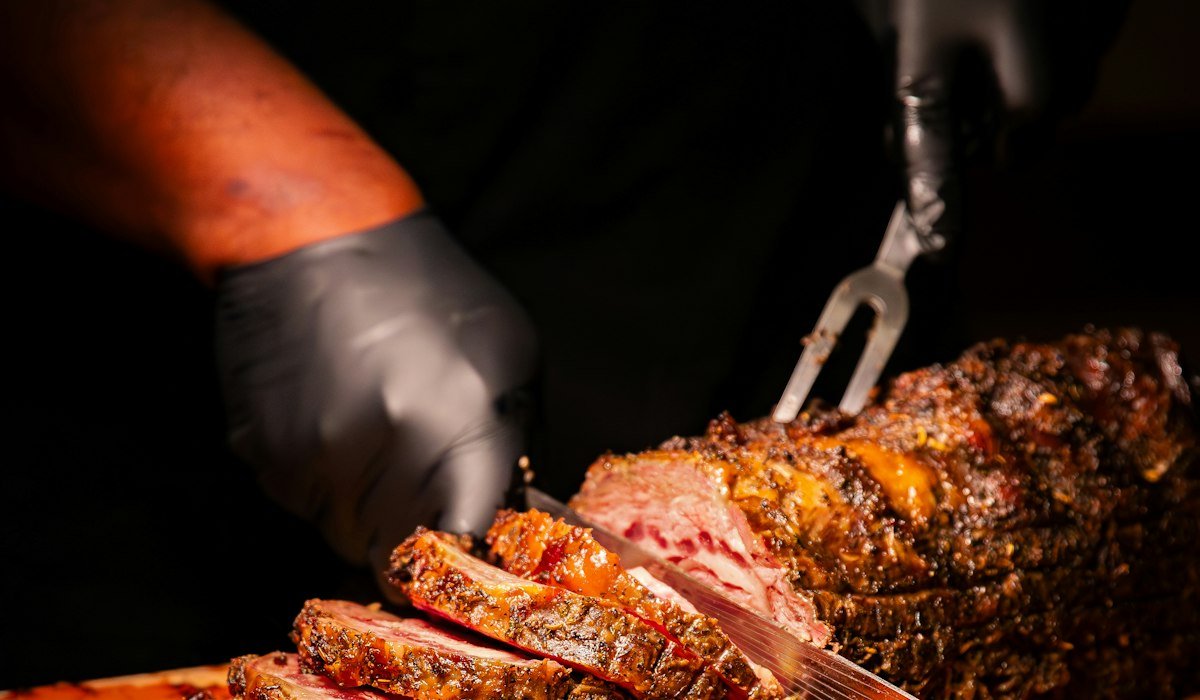
Nothing anchors a holiday table quite like a prime rib. That deeply browned crust, the rosy-pink center, and the way the whole kitchen smells like a special occasion—it is no wonder cooks get a little nervous about the timing. The good news is that how long to cook a prime rib comes down to three simple numbers: the weight of your roast, your oven temperature, and the doneness temperature you are aiming for. Get those three right, and the rest is patience.
In this guide, you will find a straightforward time-per-pound chart, a reliable step-by-step roasting method, pull temperatures for every level of doneness, and answers to the questions home cooks ask most. Whether this is your first standing rib roast or your fifteenth, you will know exactly when to put it in the oven, when to take it out, and how long to let it rest. If you enjoy holiday cooking guides like this one, you can find more of them in our Food archive.
Short Answer: How Long to Cook a Prime Rib
For a classic medium-rare prime rib roasted at 325°F after a short high-heat sear, plan on about 15 minutes per pound. A 5-pound roast takes roughly 1 hour 15 minutes to 1 hour 30 minutes in the oven, plus at least 20 minutes of resting. A 10-pound roast needs about 2 1/2 to 3 hours, plus rest.
Those numbers are a starting point, not a promise. The shape of the roast, whether it is bone-in or boneless, how accurately your oven holds its temperature, and how cold the meat was when it went in all shift the timing. That is why experienced cooks treat time-per-pound charts as planning estimates and trust an instant-read thermometer for the final decision. Use the table below to plan your day, then let temperature—not the clock—tell you when dinner is ready.
| Roasting method | Target doneness | Approx. minutes per pound | Example: 8-pound roast |
|---|---|---|---|
| 450°F sear, then 325°F | Rare | 13–14 | About 1 hr 45 min–1 hr 55 min |
| 450°F sear, then 325°F | Medium-rare | 14–16 | About 1 hr 55 min–2 hr 10 min |
| 450°F sear, then 325°F | Medium | 16–18 | About 2 hr 10 min–2 hr 25 min |
| 225–250°F, sear at the end | Rare | 25–30 | About 3 hr 20 min–4 hr |
| 225–250°F, sear at the end | Medium-rare | 30–35 | About 4 hr–4 hr 40 min |
| 225–250°F, sear at the end | Medium | 35–40 | About 4 hr 40 min–5 hr 20 min |
Always add 20 to 30 minutes of resting time after the roast leaves the oven, and start checking the internal temperature about 30 minutes before the earliest time in the chart. A roast that looks done on the outside can still be cool in the center, and the only way to know for sure is to measure.
Choosing the Right Prime Rib for Roasting

Prime rib is cut from the rib primal, the same section that produces ribeye steaks—which is why it is also sold as a “standing rib roast.” Despite the name, it does not have to be USDA Prime grade. Most of what you see in stores is USDA Choice, which roasts beautifully and costs considerably less. Prime grade has more marbling and a richer flavor, so buy it if the budget allows, but Choice is the sweet spot for most holiday tables.
Bone-In vs. Boneless Prime Rib
The classic presentation is bone-in: the ribs form a natural roasting rack, they shield the meat slightly from the heat, and they make a dramatic tableside moment. Boneless roasts—often labeled ribeye roasts—are easier to carve, and every slice is uniform, which some hosts prefer. Cooking time per pound is similar either way, although bone-in roasts can take a little longer because the bones insulate the meat. If you buy bone-in but want easy carving, ask the butcher to cut the bones off and tie them back on. You get the roasting benefits of the bones and the carving ease of a boneless roast.
How Much Prime Rib to Buy Per Person
Plan on about 1/2 to 3/4 pound per person for a bone-in roast, since the bones add weight you will not serve. For boneless, 1/2 pound per person is plenty, and generous appetites—or hopes for leftovers—push that toward 3/4 pound. A handy rule of thumb is one rib for every two guests: a three-rib roast, roughly 6 to 8 pounds, serves six to eight people. When in doubt, buy a little extra. Leftover prime rib is one of the best parts of the holiday.
Seasoning and Prepping Your Prime Rib

Prime rib has so much natural flavor that it needs very little help. Coarse kosher salt and freshly cracked black pepper are the non-negotiable base; from there, garlic, fresh rosemary, and thyme are the classic companions. Some cooks add a thin coat of Dijon mustard or olive oil to help the seasoning cling, but the salt does most of the work.
The Dry Brine Method
For the best crust and the most even seasoning, salt the roast 24 to 48 hours ahead and leave it uncovered on a rack in the refrigerator. This dry brine draws moisture to the surface, dissolves the salt into it, and then pulls that seasoned moisture back into the meat—effectively seasoning it from the inside out. The uncovered rest also dries the surface, which is the secret to deep, even browning. If you are short on time, even an overnight salt is far better than seasoning right before roasting.
Simple Seasoning Blends That Work
About an hour before roasting, pat the roast dry and rub it with minced garlic, chopped rosemary and thyme, cracked pepper, and a thin film of olive oil or softened butter. Keep the flavors simple enough that the beef stays the star. Skip heavy marinades and sugary rubs: sugar can scorch over a long roast, and prime rib does not need tenderizing. One caution—if you dry-brined with plenty of salt, do not add more salt in the final rub. Saltiness builds fast, and you cannot take it back.
How to Cook a Prime Rib, Step by Step
Two methods dominate prime rib roasting: the classic high-heat sear followed by a moderate roast and the reverse sear—low and slow, with the sear at the end. Both produce excellent results. The classic method is faster and more traditional; the reverse sear gives edge-to-edge even color and a wider margin for error. The steps below follow the classic method, with reverse-sear notes where they differ.
Step 1: Bring the Roast to Room Temperature
Set the seasoned roast on the counter 1 to 2 hours before it goes into the oven. A less-chilled roast cooks more evenly, and the timing chart stays more accurate. Do not leave it out longer than 2 hours—that is the standard food-safety limit for perishable food at room temperature.
Step 2: Preheat and Set Up the Pan
Heat the oven to 450°F. Place the roast bone-side down in a sturdy roasting pan fitted with a rack, so hot air circulates underneath. If you do not have a rack, rest the roast on a bed of thick-cut onions, carrots, and celery—they lift the meat and become the base of a great pan sauce later. Tuck a probe thermometer into the thickest part of the meat, away from the bone.
Step 3: Sear, Then Roast Low
Roast at 450°F for 15 to 20 minutes to build a deep brown crust, then reduce the heat to 325°F without opening the door and continue roasting until the thermometer reads your target pull temperature. (Reverse-sear version: roast at 225–250°F all the way to about 10°F below your target, rest the meat, then blast it at 500°F for 8 to 10 minutes to crisp the exterior.)
Step 4: Check the Temperature Early and Often
Start checking about 30 minutes before the chart’s earliest estimate. Home ovens often run hot or cold, so an inexpensive oven thermometer tells you the truth about yours. Remember that a roast keeps cooking after it leaves the oven, so pull it 5 to 10°F below your final target—you can always cook it a touch more, but you can never undo overcooking.
Step 5: Rest the Roast
Transfer the roast to a cutting board, tent it loosely with foil, and rest it for 20 to 30 minutes. Resting lets the temperature even out and the juices redistribute, so they stay in the meat instead of flooding the board. Do not skip it, and do not carve early—a rushed carve is the fastest way to dry out a perfect roast.
Prime Rib Doneness Temperatures and Resting Time

Pull temperatures run lower than serving temperatures because of carryover cooking: a large roast typically climbs another 5 to 10°F while it rests. Aim for these pull temperatures and let the rest finish the job:
| Doneness | Pull temperature | Final temperature after rest | What it looks like |
|---|---|---|---|
| Rare | 120–125°F | 125–130°F | Cool red center |
| Medium-rare | 130–135°F | 135–140°F | Warm red center |
| Medium | 140–145°F | 145–150°F | Warm pink center |
| Medium-well | 150–155°F | 155–160°F | Slightly pink center |
| Well-done | 160°F and up | 160°F and up | Little or no pink |
For food safety, whole beef roasts should reach at least 145°F with a 3-minute rest—that is the medium range, and it is where federal safe-temperature guidance lands. Many prime rib lovers prefer medium-rare, and that is a personal choice to make with the chart above. Either way, the thermometer is what keeps the result repeatable.
How to Carve a Prime Rib

If your butcher did not already do it, start by slicing along the bones to free the rack in one piece—and save those ribs, because they are the cook’s treat. Turn the roast cut-side down so it sits flat and steady, then slice across the grain into 1/2- to 3/4-inch slices. Thinner slices feel more elegant and cool a little faster; thicker, steak-cut slices suit hearty appetites. Use a long, sharp carving knife and let the blade do the work—sawing back and forth tears the crust and shreds the meat. Arrange the slices on a warm platter, spoon over any juices from the board, and serve right away.
What to Serve With Prime Rib
Prime rib is rich, so the best sides either cut through that richness or soak up the juices. A creamy horseradish sauce or a sharp Dijon mustard is almost mandatory at many tables. Yorkshire pudding or crusty rolls catch every drop, while roasted potatoes, glazed carrots, and creamed greens round out the plate. Add something green and bright—roasted Brussels sprouts or a simple salad with a sharp vinaigrette—to balance the meal. Keep the sides simple and make-ahead friendly: the roast is the headliner, and everything else is the supporting cast.
Storing and Reheating Leftover Prime Rib
How to Store Leftovers
Refrigerate leftovers within 2 hours of serving. Wrap slices—or the remaining roast—tightly in foil or plastic wrap, or seal them in airtight containers, and refrigerate for up to 3 to 4 days. For longer storage, freeze well-wrapped portions for up to 2 to 3 months. It helps to slice before freezing so you can thaw only what you need, and a layer of plastic wrap under the foil guards against freezer burn.
How to Reheat Without Overcooking
The enemy of leftover prime rib is a blast of high heat, which turns pink centers gray and dries out the meat. Instead, warm slices gently in a 250°F oven, wrapped in foil with a splash of beef broth, until just heated through—about 10 to 15 minutes. For a single slice, a quick sear in a hot skillet, roughly a minute per side, warms it through while keeping the center rosy. However you reheat, aim for warm rather than hot: leftovers are best served just below the temperature you originally cooked them to.
Common Mistakes When Cooking Prime Rib
- Cooking by time alone. The chart plans your day; the thermometer finishes the job. An overcooked prime rib cannot be fixed, but an undercooked one can always go back in.
- Skipping the rest. Carving too soon spills the juices you spent hours building. Give it the full 20 to 30 minutes.
- Roasting straight from the fridge. A cold center throws off every estimate and roasts unevenly.
- Using a dull knife. Tearing the meat ruins the texture of otherwise perfect slices.
- Double-salting after a dry brine. If you salted ahead, the final rub needs no extra salt.
- Opening the oven door constantly. Every peek drops the temperature and adds minutes to the roast.
FAQs About How Long to Cook a Prime Rib
How long does it take to cook a prime rib per pound?
About 15 minutes per pound at 325°F (after a high-heat sear) for medium-rare, or 30 to 35 minutes per pound at 225–250°F for the reverse-sear method. Always confirm doneness with a thermometer rather than the clock.
Should I cook prime rib covered or uncovered?
Uncovered. Covering the roast steams the exterior and prevents the crust from forming. Tent it loosely with foil only during the resting period.
What temperature should prime rib be when I take it out of the oven?
Pull it 5 to 10°F below your target: 130–135°F for medium-rare, 140–145°F for medium. Carryover cooking during the rest brings it up to the final temperature.
How long should prime rib rest?
Rest it 20 to 30 minutes, tented loosely with foil. Larger roasts benefit from the full 30 minutes.
Can I cook prime rib the day before?
You can roast it ahead and reheat it gently—250°F, covered, with a splash of broth—but the crust will never be quite as crisp as it is fresh from the oven. For the best result, roast and serve on the same day.
Why is my prime rib tough?
Usually, overcooking. Even a few degrees past the target firms up the texture noticeably. A reliable instant-read thermometer is the fix, along with slicing against the grain.
Final Thoughts
Once you have cooked a prime rib with a thermometer and a time-per-pound plan, the mystery disappears. It becomes one of the most forgiving centerpieces you can make, because the oven does nearly all of the work. Plan with the chart, season simply, pull the roast by temperature, and rest it without rushing. Do that, and the question of how long to cook a prime rib answers itself every time. For more holiday cooking ideas, start at our homepage and keep exploring.

I’m Nova, a skilled AI content writer with 3 years of experience, specializing in heartfelt prayers, Bible messages, and uplifting spiritual content.