

Direct answer: In simple terms, dh58goh9.7 has not been conclusively identified through authoritative public documentation as a specific, established software product, so any improvement ideas for it are proposals, not confirmed features or announced plans. This review explains what the identifier might be, and outlines seven practical software engineering improvements that would matter most if it is an actively maintained project.
Introduction
Software that works well today can still fall behind tomorrow. Changing user expectations, new security threats, evolving devices, and increasing workloads all create reasons to rethink how applications are designed and maintained.
That is why the question of how to improve dh58goh9.7 software in future is worth exploring from a practical, long-term perspective. In this review, you will learn what is known and unknown about the identifier, and which improvements would make the most difference, in what order, if a real project sits behind the name.
What Is dh58goh9.7 Software?
The name dh58goh9.7 resembles a technical identifier, package label, or version-style string. However, its format alone does not reveal whether it refers to a desktop application, mobile tool, firmware component, internal development build, or another type of software.
That uncertainty matters, because the best improvement strategy depends on what the software actually does. A data-processing application may need better memory management, while a business application may benefit more from clearer navigation and improved reporting. A background system component might require stronger diagnostics and compatibility testing.
Before making changes, developers or administrators should establish the software’s official name and developer, its primary purpose and intended users, supported operating systems and devices, existing features and known limitations, current version and release history, installation method, dependencies, and licensing, and available documentation and technical support.
Once those facts are known, it becomes much easier to prioritise improvements that solve real problems, rather than adding features simply because they sound impressive.
A sensible future-development plan should balance immediate fixes with longer-term improvements. The main goals would be to improve performance without sacrificing stability, strengthen security and protect user information, make everyday tasks easier to complete, reduce crashes and unexpected errors, improve compatibility with supported devices and systems, and make updates easier to test, install, and maintain.
1. Improve Performance and Speed
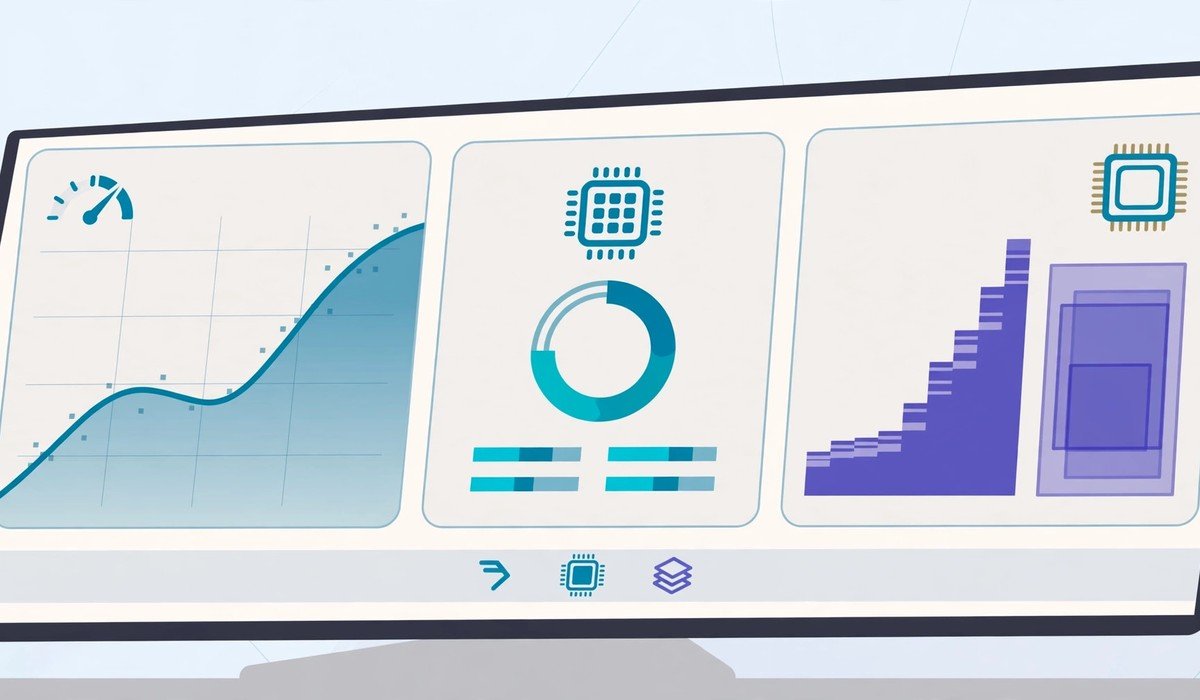
Speed is one of the first things users notice. Slow startup times, unresponsive controls, excessive memory consumption, and delayed processing can make even a feature-rich application frustrating to use.
If performance becomes a concern, the first step should be to identify the cause, rather than immediately changing settings or rewriting code. Developers can use profiling tools to examine how an application uses its processor, memory, storage, and network connections, and identify which operations consume the most time or resources.
Useful measurements include application startup time, response time for common actions, memory consumption during extended use, CPU usage under normal and heavy workloads, error rates during large tasks, and time required to complete important operations. Comparing these measurements before and after a change provides evidence of whether the improvement actually worked.
Once a bottleneck is identified, developers can investigate inefficient algorithms, unnecessary calculations, repeated database queries, or excessive background processing. Caching may help when an application repeatedly requests the same information, asynchronous processing can keep the interface responsive while longer tasks run in the background, and better resource cleanup may prevent memory consumption from increasing during extended sessions. These techniques should be applied selectively, because caching, for example, can introduce stale data or additional memory overhead when implemented poorly.
Future goal: make the software measurably more responsive, while keeping resource consumption predictable and maintaining the same level of reliability.
2. Strengthen Security and Privacy

Security should be part of every software improvement cycle, not something developers consider only after a problem occurs. If dh58goh9.7 handles personal information, business records, credentials, or other sensitive data, future development should prioritise protecting that information throughout its lifecycle.
Applications should give users and system processes only the permissions they need. This principle, known as least privilege, reduces the potential damage caused by compromised accounts or unintended actions. Depending on the software’s purpose, useful improvements may include multi-factor authentication, role-based permissions, secure password and session management, encryption for sensitive data in transit and at rest, clear controls over data collection and retention, and detailed records of important administrative actions. Not every application requires every feature; security controls should reflect the information the software handles and the risks associated with its use.
Developers should also maintain an inventory of third-party libraries and dependencies, monitor security advisories, and apply relevant fixes promptly. Automated security testing can help identify common coding weaknesses before a release, and independent security reviews may be appropriate when an application handles sensitive information or supports important business operations.
Future goal: make security easier to maintain through routine testing, timely patches, clear permissions, and transparent privacy practices.
3. Improve the User Interface and Experience
Strong engineering alone does not save a confusing product. People should be able to finish a job without hunting through tangled menus or living inside the manual.
That means putting everyday features where they can be found at a glance, grouping related settings together, cutting steps that add nothing, and swapping puzzling labels for plain words. It also means telling the user clearly when an operation has started, finished, or failed, instead of leaving them guessing.
Error messages are a good place to start. Compare a bare “Operation failed” with a message that names the failed operation, suggests why it may have failed, and offers a next step. The second kind cuts frustration and support tickets alike, provided it never leaks passwords, confidential records, or other sensitive detail.
Different users, devices, and working conditions matter too. Useful accessibility work includes keyboard navigation with visible focus, readable type with enough contrast, screen-reader support, adjustable text size, clear form labels with helpful validation, and layouts that hold up across supported screen sizes.
Future goal: let ordinary tasks be finished with less friction, fewer avoidable errors, and a product more people can use comfortably.
4. Add Features Based on Real User Needs
Fresh features can add real value, yet piling them on quickly also adds complexity and future maintenance work. The wiser route is to find the jobs users actually struggle with and tackle those first.
What that means in practice depends on what dh58goh9.7 really does, but plausible directions include more flexible configuration, sharper search and filtering, better import and export, richer reporting or customisation, integration through documented APIs, and clearer notifications and status information. Treat all of these as possibilities to explore, not as confirmed features of the software today.
A disciplined feedback loop helps separate common pain points from one-off requests. Interviews, support-ticket patterns, usability sessions, and well-designed feedback forms all contribute, and proposed changes can then be ranked by benefit to users, effort to build, security impact, and ongoing cost. Shipping a feature is not success in itself; success is what users actually gain from it once it is in their hands.
Future goal: add only features that answer a documented need, without making the product needlessly complicated.
5. Improve Compatibility and Integration
Few products live alone anymore. They sit beside other apps, services, devices, and operating-system versions, and a compatibility snag can block adoption even when the product itself is good.
Where dh58goh9.7 is meant to run in several environments, the team should state plainly which setups are supported and then test those setups consistently. Documentation needs to cover supported operating systems, minimum hardware, required dependencies, and known limits, and key workflows should be tried on representative supported configurations rather than assumed to work everywhere because they worked on one machine.
For integrations, documented APIs and standard data formats ease the connection to other services. Integration tests should cover authentication, error handling, data consistency, and what happens when an outside service goes down, and API changes should be written up so existing integrations are not broken silently by an update.
Future goal: fewer compatibility surprises, and a product that stays maintainable as its surroundings change.
6. Build a More Reliable Testing and Update Process
An update should never just add things; it should also protect the functions people already rely on. A steady testing and release routine is the most reliable way to do both.
A sensible testing mix, depending on the project, covers unit tests for single functions, integration tests for components working together, regression tests for faults introduced by recent changes, performance tests for response times and resource use, security tests for common weaknesses, and usability tests for whether people can actually finish important tasks. Automation will not catch everything, but it catches a great deal earlier and makes repeated releases far more predictable.
Where it fits, releasing first to a limited group of testers surfaces compatibility trouble and odd behaviour in real conditions, while urgent fixes should still move on a severity-driven timetable.
Release notes matter just as much: meaningful changes, known issues, security fixes, compatibility requirements, and anything users must do. Nobody should have to guess what an update changed or whether their data is affected.
Future goal: steadier improvements, with fewer regressions, installation failures, and surprise outages.
7. Explore AI and Automation Carefully
AI and automation can open doors for some projects, but popularity alone is a poor reason to adopt them. For dh58goh9.7 the question turns on its real purpose, the data available, its architecture, and what users actually need.
Where they fit, possible uses include smarter search, assisted data entry, automated classification, or help with routine troubleshooting, and automation may also cut repetitive manual work. Yet AI brings its own baggage: privacy, accuracy, running costs, model security, and the chance of wrong answers.
A careful rollout starts from one specific user problem, weighs AI against simpler approaches, tests accuracy and reliability on representative data, protects sensitive information, keeps a human in the loop for consequential decisions, and watches performance after launch.
Future goal: adopt emerging technology only where the benefit can be measured, while users stay informed and in control.
A Practical Roadmap for Future Improvements
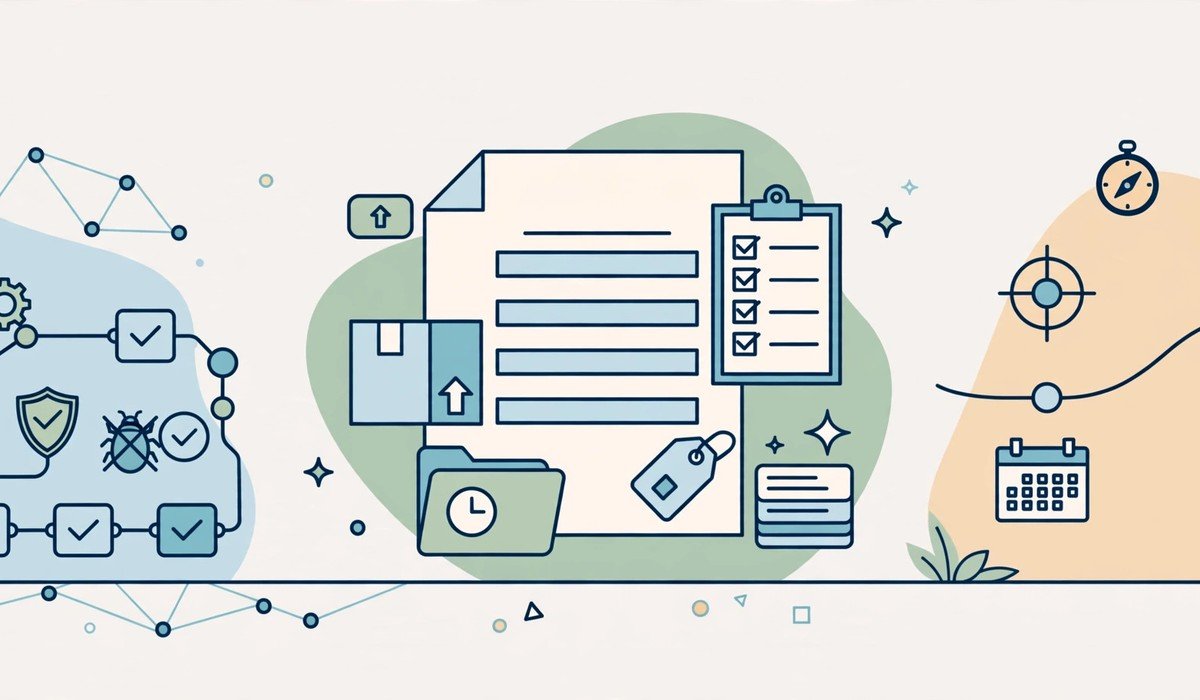
The following roadmap offers a sensible order for a software team to follow, once the identity and technical details of dh58goh9.7 have been verified.
| Development stage | Main priority | How to evaluate success |
|---|---|---|
| Stage 1 | Confirm identity and document the system | Clear ownership, specifications, and supported environments |
| Stage 2 | Measure performance and reliability | Repeatable benchmarks and error-rate measurements |
| Stage 3 | Review security and dependencies | Resolved findings and documented security procedures |
| Stage 4 | Improve usability | Better task-completion rates and user feedback |
| Stage 5 | Strengthen testing and releases | Fewer regressions and more reliable deployments |
| Stage 6 | Evaluate new features and integrations | Demonstrable user benefit and acceptable maintenance cost |
The timeline should be based on the project’s size, risks, and available resources. Security vulnerabilities and serious reliability problems may require immediate attention, rather than waiting for a later stage.
How Users Can Help Improve dh58goh9.7 Software
Improvement is not a job for developers alone. Users often hold the detail that makes a hard-to-reproduce fault finally visible.
If you run a confirmed implementation tied to this identifier, you can help in several ways: describe a problem clearly, with the steps that led to it, what you expected, and what actually happened; note the technical context, such as version, operating system, and error messages; strip private material, removing passwords, account details, and confidential data from any logs or screenshots you share; take updates only from verified sources, which lowers the risk of counterfeit installers; give constructive feedback, saying which task is hard and how a change would help; and try preview builds cautiously, in a test setting, with important data backed up first.
A clear report beats a general complaint every time, because it lets developers reproduce the fault and judge a fix.
Frequently Asked Questions
How can you improve dh58goh9.7 software in future?
Begin by confirming what the software actually is and measuring a baseline for performance and reliability. From there, work can turn to security, usability, compatibility, testing, documentation, and features that answer genuine user needs.
Is dh58goh9.7 an officially documented software product?
No confirmed identity has emerged from authoritative public documentation. Confirming its purpose and capabilities would require a verified developer, an official product page, or a technical specification.
Can dh58goh9.7 become faster and more efficient?
Potentially, if performance problems exist in the actual implementation. Profiling, efficient algorithms, appropriate caching, and better resource management are established ways to improve software performance, but the results must be measured rather than assumed.
What new features should dh58goh9.7 introduce?
The right features depend on what the software is designed to accomplish. Better configuration, clearer reporting, improved integrations, accessibility enhancements, or carefully chosen automation may be useful where they address demonstrated user needs.
How important is security for future software updates?
Security is essential whenever software processes data, communicates with other systems, or accepts user input. Regular dependency updates, access controls, secure development practices, and vulnerability testing can reduce risks throughout the software’s lifecycle.
Will artificial intelligence improve dh58goh9.7?
AI could be useful if it solves a specific problem more effectively than conventional methods. Its value should be assessed through accuracy, privacy, cost, reliability, and user feedback, rather than assuming that AI integration automatically improves an application.
How often should software receive updates?
There is no universal schedule. Updates should be released when justified by security fixes, defects, compatibility requirements, or useful improvements, with the urgency determined by the severity of the issue.
How can users check whether a dh58goh9.7 update is legitimate?
Verify the publisher and download source, review the release notes, and check the file’s digital signature when available. Use reputable security software to scan unfamiliar downloads, and avoid installers from unverified websites.
What is the biggest challenge in improving dh58goh9.7?
The main initial challenge is the lack of a verified technical identity and specification. Without knowing what the software does, developers cannot reliably identify its limitations, or determine which improvements would provide the greatest benefit.
Conclusion
In short, improving dh58goh9.7 in future starts with understanding the software itself. Until its developer, purpose, supported platforms, and current capabilities are verified, product-specific decisions would be guesswork.
After that, established engineering practice gives a clear path: measure performance, tighten security, simplify the experience, widen compatibility, automate testing, and keep updates transparent. New features and AI capabilities belong further down that path, taken up only when they solve a real problem with measurable value.
Developers should next document what exists today and rank improvements by need. Users should verify the source and stick to official release information.
The longer-term aim is simple enough: software that is more dependable, easier to use, safer to maintain, and better matched to the people who depend on it.

I’m Nova, a skilled AI content writer with 3 years of experience, specializing in heartfelt prayers, Bible messages, and uplifting spiritual content.